Before we started our build we selected several custom options for our plane. Strangely enough, there is no list of all possible options. We just had to keep asking to find out (HINT: someone at TAF should make a list). Anyway here are a few options we selected as part of our order: Split Rear Seat - This will allow for three passengers and luggage. We also plan to make the rear seat removable because we most often fly without any passengers and lots of luggage. Extra Long Seat Rails - My family is really tall, so we asked for extra long seat rails. This will allow them to move the seat back a few extra inches to accommodate for those long legs. Foot Pedals - The standard it comes with really cheap looking rudder bars. It turns out there is a option to get custom aluminum Sling branded pedals. They are on backorder. Besides the options from the factory, now that we are building we have learned about many small modifications that other builders are making. Here are some th...
I built my first RC when I was 13 years old. It looked great. It flew like a brick, from my hand (the launch pad) to the ground, in what now I would call a deadly spin. It took me several years until I went back to building models. Our first son was my assistant. One of the things I knew, was there was a need to “misalign” the engine in the longitudinal axis to compensate for turning tendencies. Then I earned my PPL certificate, and I could say I had a better understanding of adverse yaw, and left turning tendencies (no, I am not talking about politics). And that was when the lightbulb went off: sometimes, airplane designers, tweak engine mounts to offset the left turning tendencies. This weekend, we work in N333ST, our TSI. Arthur and I were in awe when we noticed how the offset looks like. You can easily see the engine mount itself (view from the top), and once the engine is mounted, it clearly points to the right.
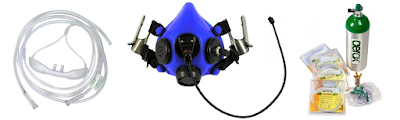
Today I did some research on the oxygen system for our Sling TSI. We plan to fly far and high, but probably only with two occupants. The plane is rated to 18,00 feet, but some have taken it to 30,000 feet . That's exciting, but we need to make sure our plane is equipped with the oxygen system appropriate for those altitudes. For reference, here are the oxygen requirements at various flight levels: 12,500 feet - the crew must use supplemental O2 after 30 cumulative minutes 14,000 feet - pilots are required to use supplemental O2 15,000 feet - each occupant must be provided supplemental O2 18,000 feet - crew must use an oxygen mask (cannula is no longer sufficient) As part of our panel we are installing an Aithre Shield 3.0, which monitors CO levels in the cabin, as well as O2 tank pressure and blood oxygen levels via bluetooth connected sensors. The complete oxygen system will require the following components: Aithre Shield 3.0 - permanently installed behind the panel Aithre ...




Comments
Post a Comment